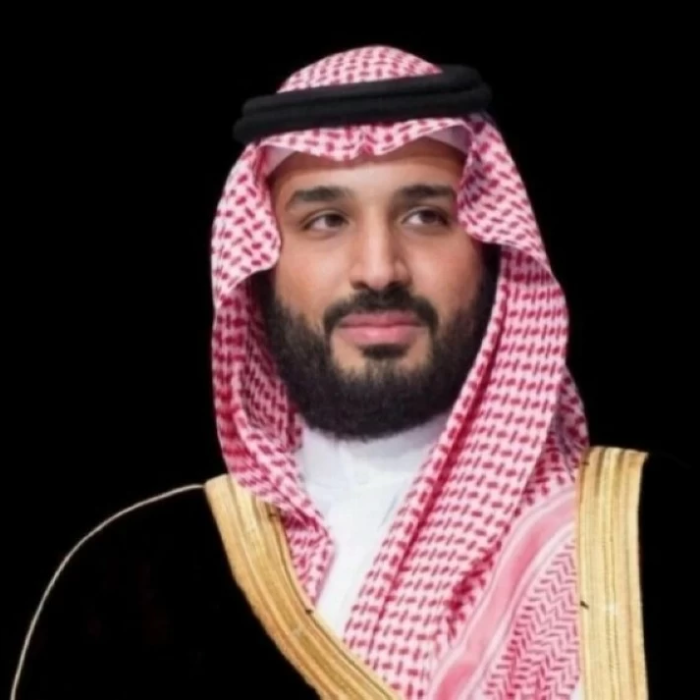



In a further affirmation of his high standing, Saudi Crown Prince Mohammed bin Salman has been named the “Most Influential Arab Leader of 2025” for the fifth consecutive year. This selection was based on the results of a wide-ranging international media poll, in which hundreds of thousands of voters from across the Arab world participated, reflecting growing public confidence in His Highness’s leadership vision.
A landslide victory in the voting figures
The final results of the poll, which ran from December 22nd to January 9th, showed a significant lead for the Saudi Crown Prince. Prince Mohammed bin Salman garnered 372,312 votes out of a total of 540,495. This represents 68.88% of the total votes cast, a figure that reflects broad consensus on his pivotal role in the region.
Development vision and enhancing international standing
This choice is not arbitrary, but rather stems primarily from the successive successes achieved by the Kingdom of Saudi Arabia under the leadership of the Custodian of the Two Holy Mosques and the direct supervision of the Crown Prince through "Saudi Vision 2030." In recent years, the Kingdom has transformed into a vast workshop, launching unprecedented mega-projects such as NEOM and The Line, in addition to the Red Sea and Qiddiya projects, all aimed at diversifying the Kingdom's sources of income away from oil.
On the social level, the Kingdom witnessed structural reforms that enhanced the quality of life, empowered women, and opened new horizons in the culture, entertainment, and sports sectors, making the Saudi model the focus of attention and admiration for Arab youth aspiring to change and development.
A pivotal role in the regional and international landscape
Politically, Crown Prince Mohammed bin Salman has played a pivotal role in reshaping alliances in the region and bolstering the Kingdom's position as a political and economic power within the G20. Saudi policy has recently been characterized by proactive diplomacy aimed at resolving regional conflicts, promoting stability, and building balanced strategic partnerships with major global powers in both the East and West, thereby enhancing the Kingdom's influence on international decisions related to energy, security, and international peace.
Ranking of Arab leaders in the poll
The survey witnessed competition among a number of Arab leaders, with the results for the remaining positions being as follows:
- Second place: Jordanian monarch King Abdullah II, who received 145,074 votes, representing 26.84%, reflecting appreciation for his role in maintaining Jordan's stability and supporting Arab causes.
- Third place: Syrian President Ahmed al-Sharaa, who came in third with 6,068 votes (1.12%).
- Fourth place: Moroccan monarch King Mohammed VI, with 4,771 votes (0.88%), in recognition of his development efforts in the Kingdom of Morocco.
- Sixth place: Egyptian President Abdel Fattah al-Sisi, who came in sixth place this year with 4,379 votes.
This annual survey is an important indicator for measuring Arab public opinion trends, and its results have proven for the fifth year in a row that Prince Mohammed bin Salman represents the difficult figure and the most inspiring leadership model for Arab peoples in light of the geopolitical and economic transformations that the world is witnessing.